This 8-day, 7-night familiarization trip introduces travel advisors to Athens, Arcadia, and the Peloponnese through a carefully planned itinerary combining archaeology, coastal landscapes, mountain villages, regional cuisine, wineries, farms, monasteries, hotel site inspections, and authentic local hospitality.
Designed especially for first-time visitors to the region, the program explores the country through its history, culture, natural beauty, gastronomy, and evolving tourism offerings. It gives advisors the firsthand knowledge and confidence to sell Greece beyond the familiar Athens-and-islands itinerary, while showcasing authentic, experience-rich destinations that remain underrepresented in the U.S. market.
Because the special professional rate is offered to advisors gaining firsthand knowledge of the destination and its hospitality offerings, participation in all scheduled site inspections, workshops, destination-learning experiences, and hosted activities is required.
🕒 8days / 7nights
👤 6 professional spaces
📆 October 17 – 24, 2026
🛬 Greece
Christopher Nolan’s The Odyssey, starring Matt Damon and filmed partly in the Peloponnese, is bringing Greece’s legendary landscapes to global audiences. This intimate FAM gives travel advisors firsthand access to the region’s stories, hospitality, and lesser-known destinations, helping them create richer itineraries beyond Athens and the islands.






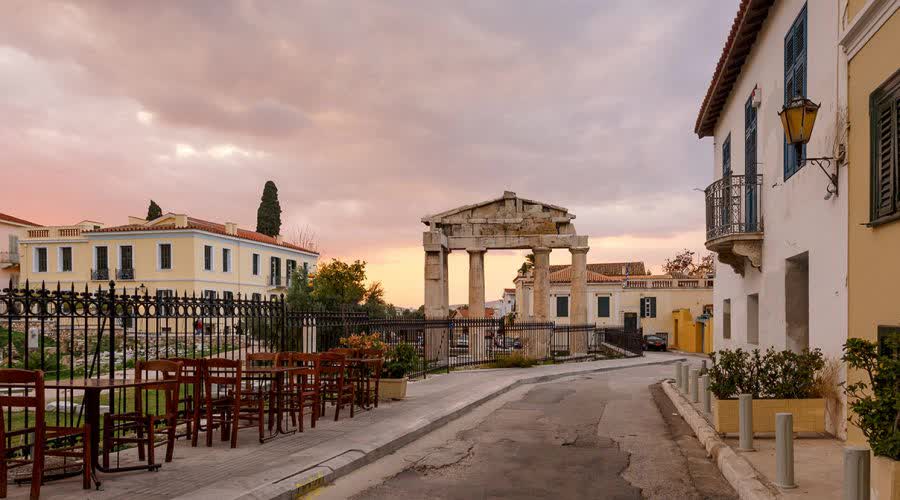
Arrive at Athens International Airport, where participants are welcomed by the local team. Transfer to the hotel and check in.
The remainder of the day is free to relax and adjust after the flight. Depending on flight arrival, participants may rest at the hotel or enjoy a short walk in the surrounding area for an easy first impression of the city.
Athens is one of the world’s oldest continuously inhabited cities, blending ancient history with contemporary urban life. Internationally recognized as the birthplace of democracy, philosophy, and classical theatre, the city offers a powerful introduction to Greece from the first day.
Ancient monuments, elegant neoclassical buildings, and lively modern neighborhoods coexist throughout the city, giving visitors a clear sense of how Athens connects its remarkable past with its present-day energy.
Overnight stay at a hotel in Athens.
Breakfast at the hotel in Athens and preparation for the first full touring day. The day begins with the most important monument of ancient Greece and ends in the Peloponnese with a visit to one of Arcadia’s best-known wineries.
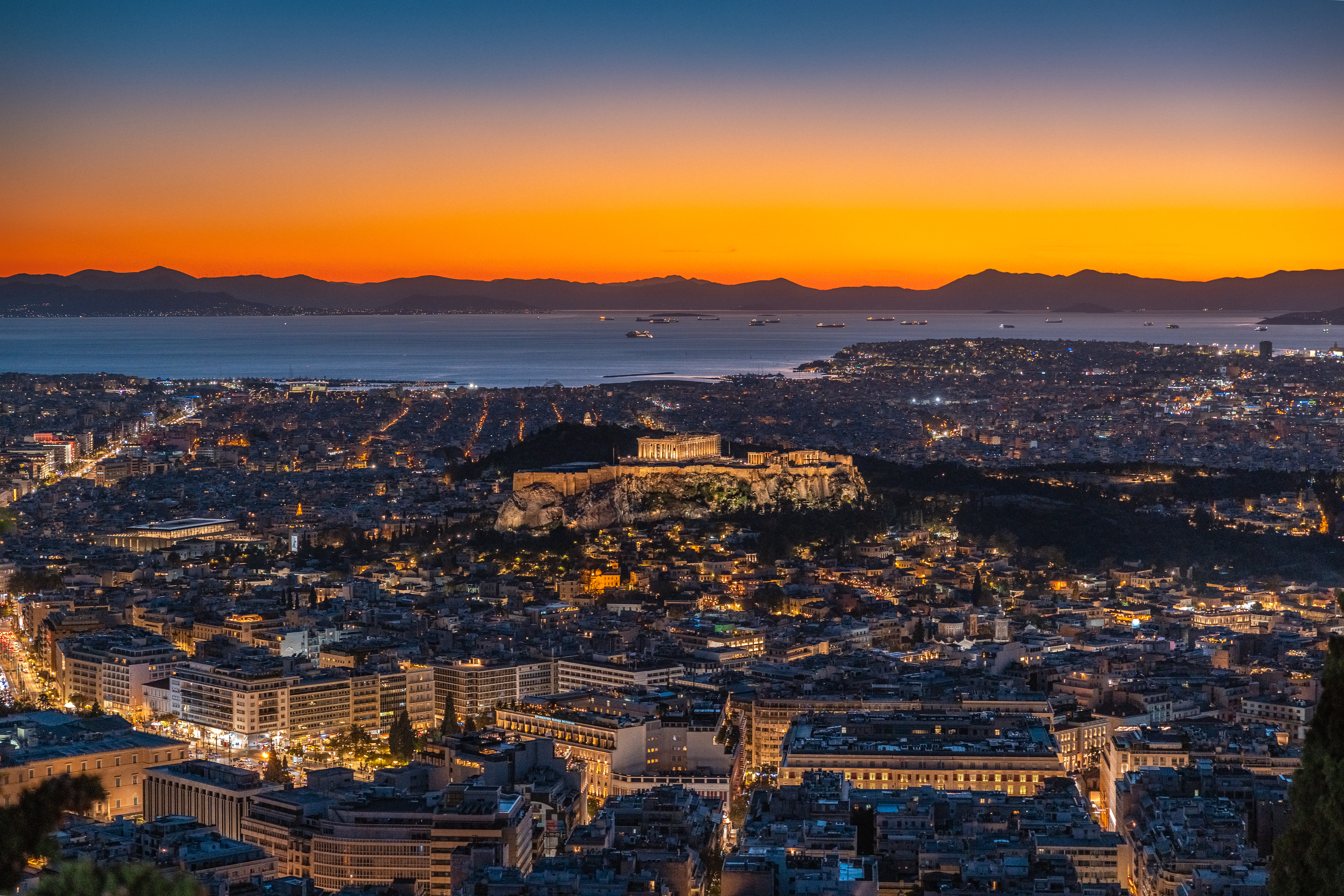
The visit begins at the Acropolis, the most important archaeological monument in Greece and one of the most recognized symbols of Western civilization. Set on a natural rocky hill about 150 meters above sea level, the site offers panoramic views of Athens, Mount Lycabettus, Philopappos Hill, and, when visibility is clear, the sea.
During the ascent and guided visit, participants are introduced to the key monuments of the Sacred Rock, including the Propylaea, the Temple of Athena Nike, the Parthenon, and the Erechtheion with the Caryatids.
At the Acropolis, advisors gain an essential introduction to ancient Greek history, mythology, religion, architecture, and the development of Athenian democracy. It is also one of the best locations for panoramic photography of Athens.
The guided visit continues at the Acropolis Museum. The museum’s modern architecture, glass surfaces, natural light, and carefully oriented galleries help visitors understand the original context of the ancient sculptures. In certain areas, glass floors reveal archaeological remains of an ancient Athenian neighborhood beneath the building.
Important exhibits include original sculptures and architectural elements from the Acropolis, the original Caryatids, Archaic-period sculptures, sections of the Parthenon frieze and pediments, and objects connected to daily and religious life in ancient Athens. The Parthenon Gallery on the top floor is oriented toward the ancient temple and gives visitors a clearer understanding of how the sculptures once decorated the Parthenon.
After the visits, lunch is included in Athens, giving participants time to enjoy Greek flavors and rest before departing for the Peloponnese.
Depart Athens toward the Peloponnese along the Athens-Corinth national road. The route gradually shifts from urban scenery to coastal views, hills, olive groves, and mountain landscapes.
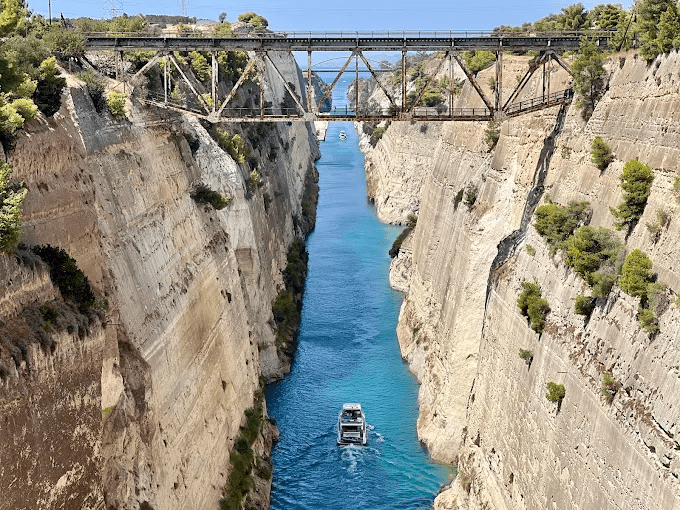
The Corinth Canal is one of the most impressive engineering works of modern Greece. About 6.3 kilometers long, it was cut through solid rock and is known for its nearly vertical walls and narrow waterway.
From the bridge, participants can see the steep rocky walls, the narrow strip of water, small ships or tourist boats crossing the canal, and the point where the Peloponnese essentially begins. This short stop is one of the itinerary’s most characteristic photo opportunities.
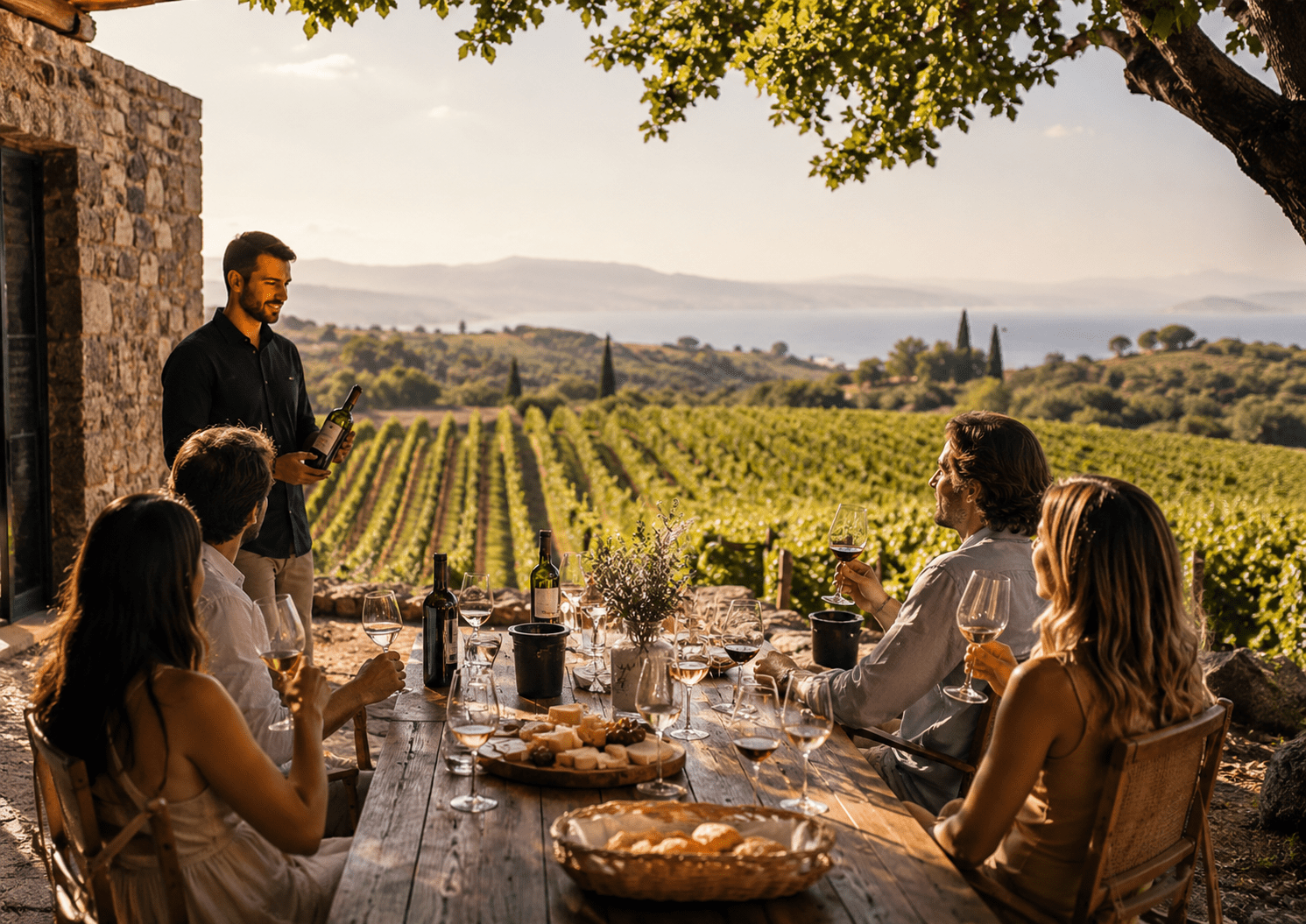
Tselepos Winery is located in the Arcadian hinterland, where altitude, vineyards, and climate support the production of aromatic wines. The visit introduces advisors to modern Greek winemaking and one of the Peloponnese’s important wine tourism regions.
Participants may learn about grape cultivation in mountainous Arcadia, the harvest, winemaking and bottling, stainless steel tanks, oak barrels, and wine aging conditions. Special attention is given to Moschofilero, a distinctive Greek grape variety closely associated with Mantinia and known for floral, citrus, and fresh fruit aromas.
The experience may conclude with a tasting of selected wines and a presentation of each label. For travel advisors, this visit shows how a local agricultural tradition can evolve into a modern, exportable tourism product.
Arrive in Paralia Astros and check in at the hotel. Paralia Astros is a seaside settlement in eastern Arcadia built around a natural bay. It is known for its beach, picturesque harbor, restaurants, and the hill with the medieval castle.
The destination combines the sea with easy access to important Peloponnese sites, making it a strong base for day trips. The evening includes a welcome dinner, an introduction to the following days, and local flavors such as olive oil, cheeses, meats, vegetables, wines, and regional recipes from the Peloponnese.
Overnight stay in Paralia Astros.
Breakfast at the hotel. Today focuses on southern Kynouria and the area often called the Arcadian Riviera, combining a sea experience, mountain nature, religious heritage, local gastronomy, and traditional settlements.
The day begins with a sailing trip along the coastline of eastern Arcadia, weather permitting. From the boat, participants can see mountain ranges descending almost directly into the sea, small coves and beaches, seaside settlements, rocky coastlines, and the clear waters of the Argolic Gulf.
This coast is less developed than many of Greece’s better-known seaside regions, which gives it an authentic and peaceful character. Tyros is a seaside settlement built amphitheatrically between the slopes of Mount Parnon and the sea. It is linked with Tsakonia and preserves distinctive cultural traditions, including the Tsakonian dialect, still spoken by some residents and believed to retain elements of ancient Doric.
After arriving in Tyros, the journey continues by road toward Elona Monastery. The route rises from the coastal zone into the mountainous landscape of Mount Parnon, shifting from sea views to rocky formations and forested scenery.
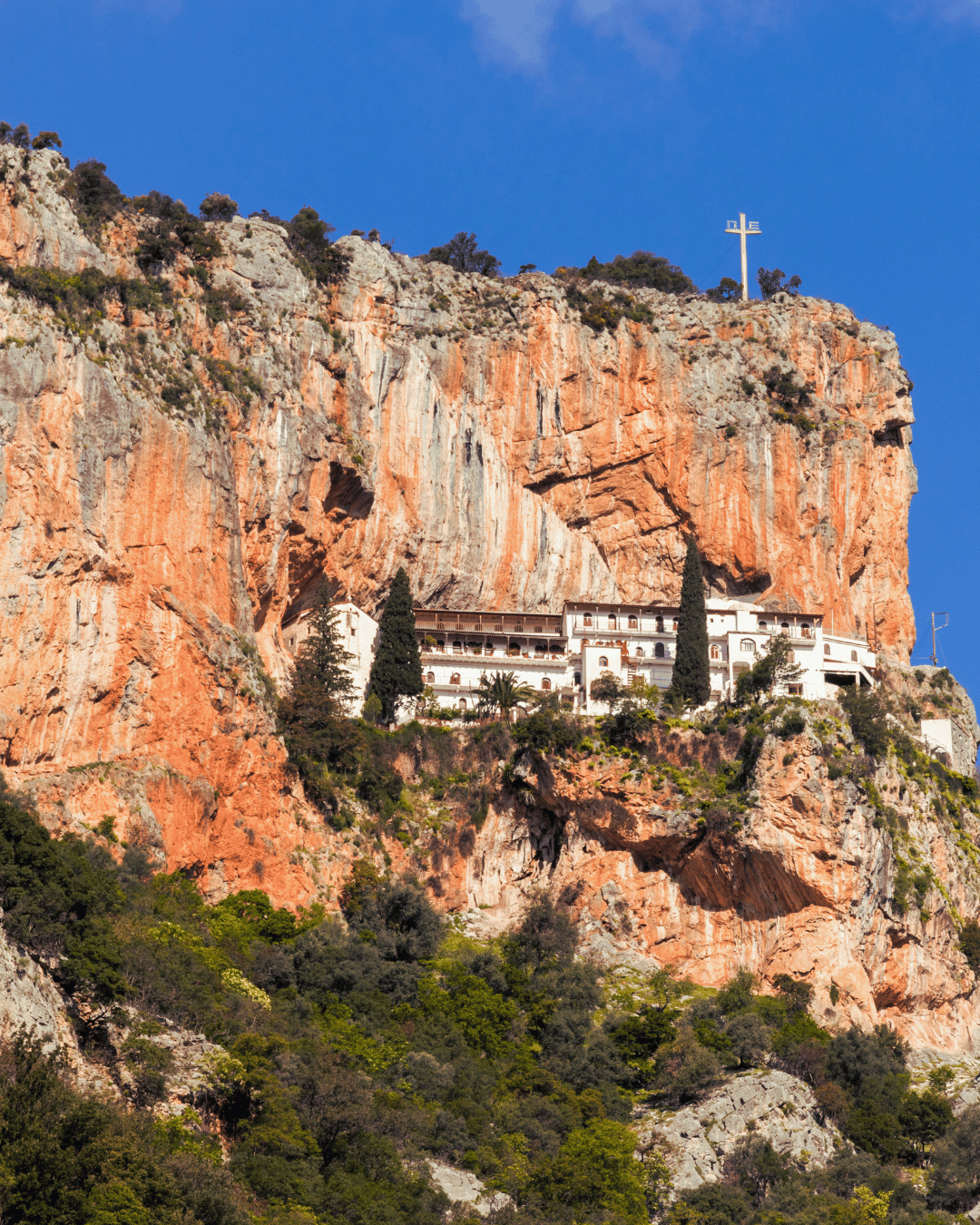
Elona Monastery is one of the most impressive monasteries in the Peloponnese. Built high on a steep reddish cliff, it appears from a distance to hang above the gorge. The monastery is dedicated to the Virgin Mary and is an important pilgrimage site for the people of Arcadia and Laconia.
This is an active religious site. Respectful clothing, quiet behavior, and compliance with photography rules are required.
Continue to the mountain village of Kosmas through the natural environment of Parnon, with forests, stone slopes, and small mountain roads.
Kosmas is one of the most beautiful mountain villages in southern Arcadia, located at a high altitude and surrounded by forests. Its central square, large plane trees, stone church, traditional tavernas, local products, and mountain scenery create the feel of a classic Greek mountain settlement.
Depending on weather conditions and seasonal availability, an organized introduction to the mushrooms of the area is planned. Participants learn about the forest ecosystems of Parnon, the conditions under which mushrooms grow, responsible foraging, and the distinction between edible and medicinal species. Collection takes place with an experienced specialized guide.
Lunch follows with local flavors. Depending on the menu, it may include risotto with truffles, local wine and cheese, and mushroom omelet, offering a simple and authentic taste of mountainous Arcadia.
Depart Kosmas for Leonidio. The descent is scenic, as the mountain forest gradually gives way to a drier Mediterranean landscape and the red cliffs of Leonidio begin to rise above the town.
Leonidio is the historical and administrative capital of Tsakonia, built in a fertile valley between the impressive red cliffs of Parnon and the sea. During the walk, participants may see mansions with distinctive architecture, stone and neoclassical buildings, narrow streets, small squares, local shops, orchards, and cultivated land.
A special local product is the Tsakonian eggplant, grown in the area and used in many local recipes. Leonidio is also one of the most important centers of Tsakonian culture, giving advisors insight into the local dialect, architecture, traditional costumes, gastronomy, and customs of the area. A hotel inspection is planned during the stay.
Depart Leonidio and return to Paralia Astros along the coastal zone of Kynouria, with views of the sea and seaside settlements. Evening at leisure and overnight in Paralia Astros.
Breakfast at the hotel. Today is dedicated to Laconia and Mani, combining a unique natural attraction, a traditional Maniot settlement, a Byzantine fortified city, and an introduction to modern Sparta.
Depart Astros toward Laconia and Mani. Along the way, participants observe the changing landscape of the Peloponnese, including fertile valleys, olive groves, mountain ranges, stone villages, and the dry, austere scenery of Mani. Mani is known for its stone towers, independent historical identity, and strong connection to tradition.
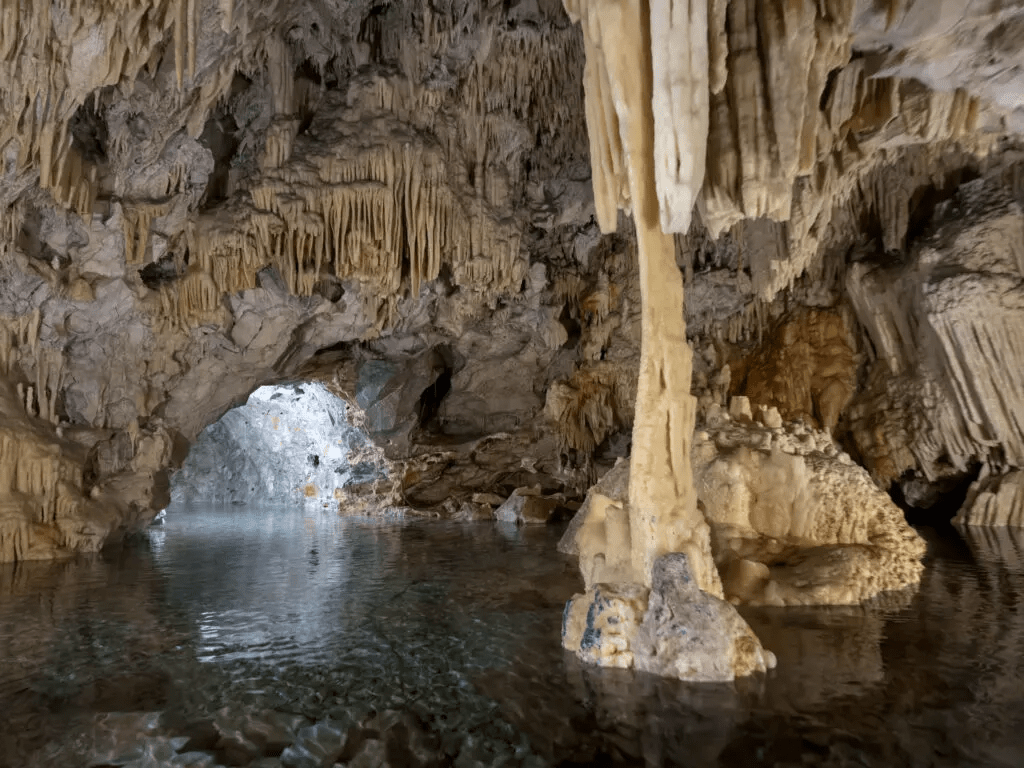
Diros Cave is one of the most important lake caves in Greece. Its interior includes underground lakes and impressive geological formations created over thousands of years. Depending on operating conditions, part of the visit is made by small boat through narrow passages, beneath stalactites and beside stalagmites.
The temperature inside the cave is cooler than outside, and the ground may be wet or slippery. Closed, stable shoes are recommended.
A short transfer brings the group to Areopoli, one of the most historic towns of Mani.
Areopoli is a traditional settlement with a strong Maniot identity. Its name is linked to Ares, the god of war, reflecting the martial character historically associated with Mani. The town preserves stone houses, tower houses, cobbled alleys, small churches, traditional squares, and shops with local products.
Areopoli is also important in modern Greek history because of its connection to the beginning of the Greek War of Independence in 1821 in Mani. A hotel inspection may take place, with special attention to accommodations housed in renovated stone buildings that combine traditional Maniot architecture with modern services.
Lunch follows at a local restaurant. Typical flavors of Mani may include syglino, orange sausages, local cheeses, pies, lalangia, olives, and extra virgin olive oil.
Depart Areopoli toward Mystras, moving from the austere Mani landscape to the fertile plain of Sparta beneath the imposing Taygetus mountain range.
Mystras is an impressive Byzantine fortified city built on a hillside near Sparta. During the Middle Ages, it served as an important political, administrative, religious, and intellectual center of the Byzantine Empire.
The churches preserve important frescoes and provide a rich picture of Byzantine art and religious life. The Palace of the Despots was the administrative center of the fortified city and the residence of the rulers of Mystras, helping visitors understand the importance of the area during the final centuries of the Byzantine Empire.
From many points within the archaeological site, visitors can see the plain of Sparta, olive groves, Mount Taygetus, and the modern city. The visit includes uphill paths and uneven ground, so comfortable shoes, water, and good physical condition are recommended.
Arrive in modern Sparta. Ancient Sparta is world-famous for its military organization, strict civic upbringing, and King Leonidas, who became associated with the Battle of Thermopylae.
A short stop is made at the statue of King Leonidas, a characteristic photo stop and a useful introduction to ancient Sparta, Spartan society, military training, and the Battle of Thermopylae. A short hotel inspection in Sparta follows.
Depart Sparta and return to Paralia Astros. Overnight stay in Paralia Astros.
Breakfast at the hotel. The day combines a familiarization visit to Astros, an agritourism experience at Sofi’s Farm, one of Greece’s most important archaeological sites, and the historic center of Nafplio.
The tour offers a comprehensive view of Astros and the wider area of northern Kynouria. Paralia Astros is a seaside destination with Blue Flag award-winning beaches, a beautiful marina, a waterfront promenade, restaurants and cafés, and a hill with a medieval castle.
The hill, known as Nisi, meaning Island, is now connected to the mainland and offers excellent views of the Argolic Gulf and the Arcadian coastline. The area is linked to modern Greek history, especially the period of the Greek War of Independence.
Depart Astros for Elliniko and Sofi’s Farm. Along the way, participants become acquainted with the rural inland areas of Argolis and the eastern Peloponnese.
The farm visit offers an experiential agritourism program connecting visitors with the Greek countryside, daily agricultural production, local products, and gastronomy.
The experience is especially relevant for families, school groups, travelers interested in sustainable tourism, gastronomic and thematic trips, and visitors who want to experience everyday life in the countryside. It helps advisors understand how the Greek diet is rooted in seasonality, small-scale production, and the direct relationship between people and the land.
Depart the farm for the archaeological site of Epidaurus. The landscape along the way includes olive groves, hills, cultivated land, and small settlements.
Epidaurus was one of the most important healing and religious centers of antiquity. The sanctuary was dedicated to Asclepius, the god of medicine and healing. Ancient visitors came here seeking healing, rest, and spiritual balance through a combination of religious rites, cleanliness, diet, exercise, sleep, and entertainment.
The Ancient Theatre of Epidaurus is the site’s best-known monument. It is famous for harmonious proportions, exceptional acoustics, natural landscape integration, and large capacity. The theatre continues to host performances of ancient drama, creating a powerful connection between past and present.
Within the wider sanctuary, visitors discover the ruins of the Temple of Asclepius, healing areas, baths, athletic facilities, and ancient accommodation buildings for patients and pilgrims. The museum presents architectural elements, sculptures, inscriptions, medical instruments, offerings, and findings that help explain the function of the healing center.
For travel advisors, Epidaurus is a strong storytelling site because it connects ancient Greek medicine, spirituality, wellness, and performance culture.
Depart Epidaurus for Nafplio.
Nafplio is considered one of the most beautiful cities in Greece and was the first capital of the modern Greek state. It combines Venetian architecture, neoclassical buildings, cobblestone streets, a waterfront, and Ottoman and Greek historical elements.
Syntagma Square is the center of the old town and is surrounded by buildings from different historical periods. Bourtzi, the small Venetian fortress on an islet in the harbor, is one of Nafplio’s most recognizable symbols. Palamidi Fortress rises above the city and, even without an organized visit, helps visitors understand Nafplio’s strategic importance.
A hotel inspection takes place during the visit.
Depart Nafplio and return to Paralia Astros. Overnight stay in Paralia Astros.
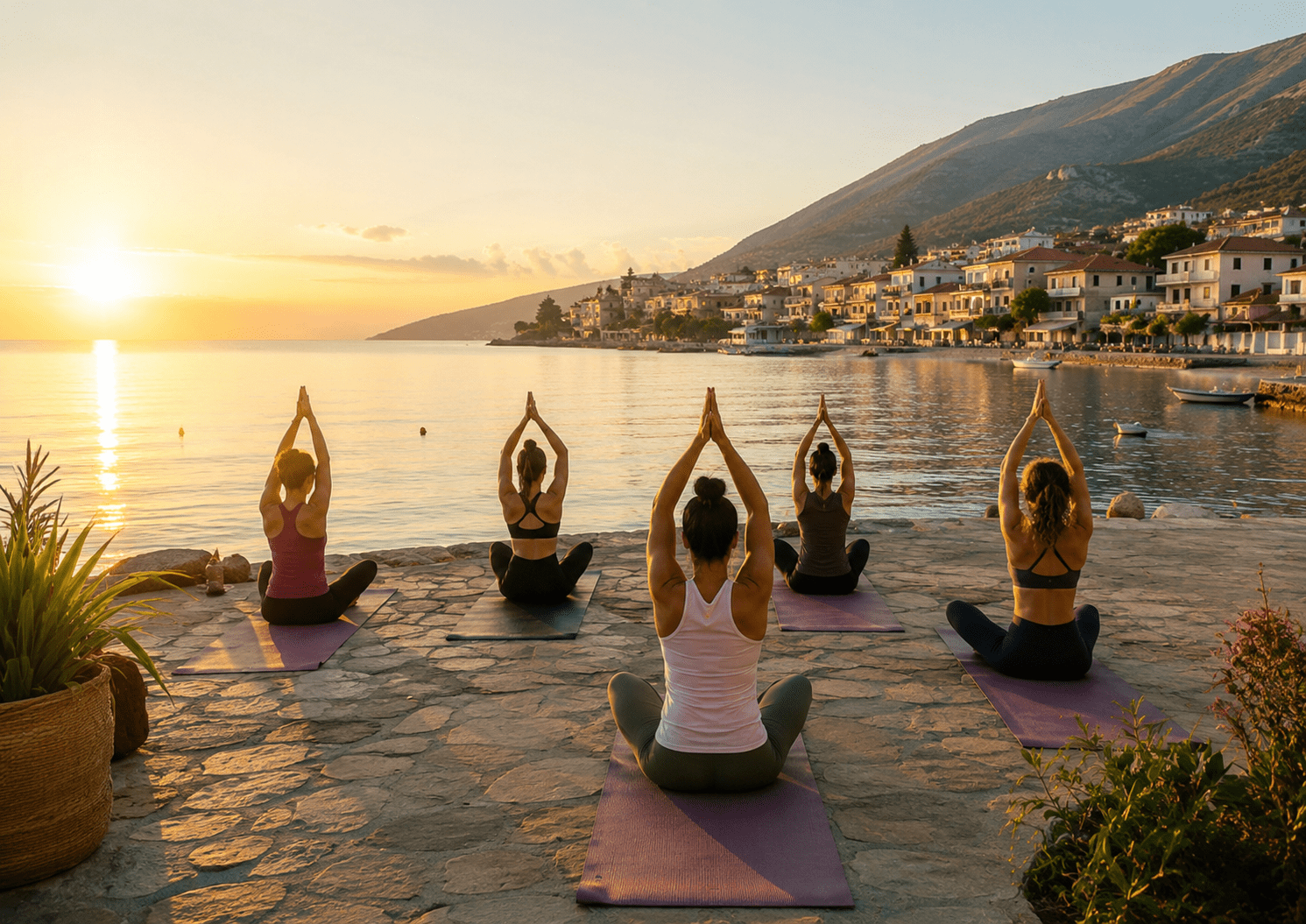
The day begins with an organized yoga session in a natural setting. Depending on weather conditions, the activity may take place near the sea, in a garden, or in a quiet outdoor area.
The activity can be adapted for beginners and does not require prior yoga experience.
After yoga, breakfast follows. A hotel inspection in Paralia Astros takes place as part of the day’s professional program.
Depart Paralia Astros for the western Peloponnese. The route crosses the Arcadian interior and offers a varied view of the region, including mountains, forests, plateaus, traditional villages, and rural areas. The drive gives participants a clearer understanding of the geographic diversity of the Peloponnese.
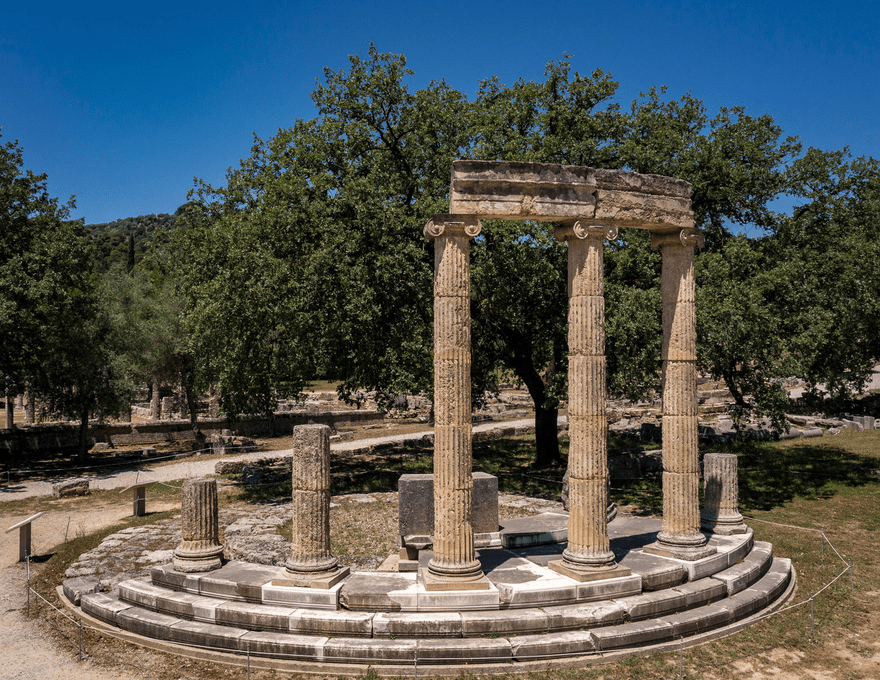
Upon arrival, lunch is included before visiting the archaeological site of Ancient Olympia. Olympia was one of the most important pan-Hellenic sanctuaries of antiquity and the birthplace of the Olympic Games. The Games were held in honor of Zeus and brought together athletes and spectators from different Greek city-states. During the Games, a sacred truce allowed participants to travel safely.
At the Sanctuary of Zeus, visitors see the ruins of the great Temple of Zeus, one of the most important monuments of the ancient Greek world. Inside it once stood the chryselephantine statue of Zeus by Phidias, considered one of the Seven Wonders of the Ancient World.
The Temple of Hera is one of the oldest temples in Olympia. In modern times, the Olympic Flame lighting ceremony takes place near the temple before each edition of the Olympic Games.
Visitors enter the Ancient Stadium through the same ancient entrance used by athletes. They can see the starting line, the competition area, and the natural slopes where spectators sat. Entering the stadium is one of the most memorable moments of the visit.
The site also includes the palaestra and training areas, where athletes prepared for the Games, and the Workshop of Phidias, associated with the creation of the great statue of Zeus. If feasible, the visit may continue to the Archaeological Museum, where visitors can see sculptures from the Temple of Zeus, the Nike of Paionios, the Hermes of Praxiteles, bronze objects, vases, and offerings.
Olympia connects ancient Greek athletics with the modern Olympic movement. Advisors can use this visit to explain that the Games were not only a sporting event, but also a religious, cultural, and social gathering.
Depart Olympia and return to Paralia Astros. Arrival at the hotel and overnight stay.
Breakfast at the hotel. Today is dedicated to Kalamata, its world-renowned olive oil, local products, and the rich gastronomic traditions of Messinia. The olive tree is one of the most important symbols of Greece’s economy, cuisine, and cultural heritage, and this experience follows the journey of olive oil from the grove to the table.
Depart Astros for Kalamata, crossing the heart of the Peloponnese and entering Messinia, one of Greece’s most important olive-producing regions.
Enjoy a guided tour of Kalamata, visiting local shops and learning about the city’s history and regional identity.
The program continues with a visit to a certified organic olive grove. Participants explore the natural environment where olive trees are cultivated and learn about the olive tree’s life cycle, pruning techniques, flowering, harvesting, organic farming methods, soil conservation, and biodiversity.
Special attention is given to the famous Kalamata olive, one of Greece’s best-known table olive varieties, recognized by its deep purple color, almond-like shape, firm and fleshy texture, and rich, full-bodied flavor.
Olive trees have been cultivated in Greece for thousands of years. In ancient Greece, the olive tree symbolized peace, victory, wisdom, fertility, and prosperity. Olive oil was valued not only as food, but also for lighting, personal care, medicine, and religious ceremonies.
Participants discover the proper method for evaluating extra virgin olive oil. The tasting introduces the different categories of olive oil, production methods, the importance of cold extraction, proper storage, quality characteristics, and common defects.
Using a professional tasting glass, participants learn to identify fruity aromas, fresh grass notes, olive leaf and herbal aromas, pleasant bitterness, and a mild peppery sensation in the throat. Bitterness and pungency are not flaws. They often indicate freshness and a high concentration of natural antioxidants.
The experience also highlights olive oil’s central role in the Mediterranean diet and traditional Greek cuisine.
Lunch features local products and authentic Messinian cuisine. The menu may include Kalamata olives, extra virgin olive oil, lalagia, local cheeses, seasonal salads, regional meat specialties, traditional pies, pasteli, and other local desserts. The meal completes the culinary experience by showing how olive oil is incorporated into everyday Greek cooking.
A hotel site inspection in Kalamata is scheduled as part of the day’s professional program.
Depart Kalamata and return to Paralia Astros.
Time to relax at the hotel or enjoy a leisurely walk around the seaside village. Participants may stroll along the beach, around the harbor, on the waterfront promenade, or through local shops and cafés.
A workshop or presentation will focus on the trip, the destinations visited, regional tourism products, and opportunities for future cooperation. Topics may include itinerary review, potential travel packages, impressions and feedback, product adaptation for international markets, and questions and answers.
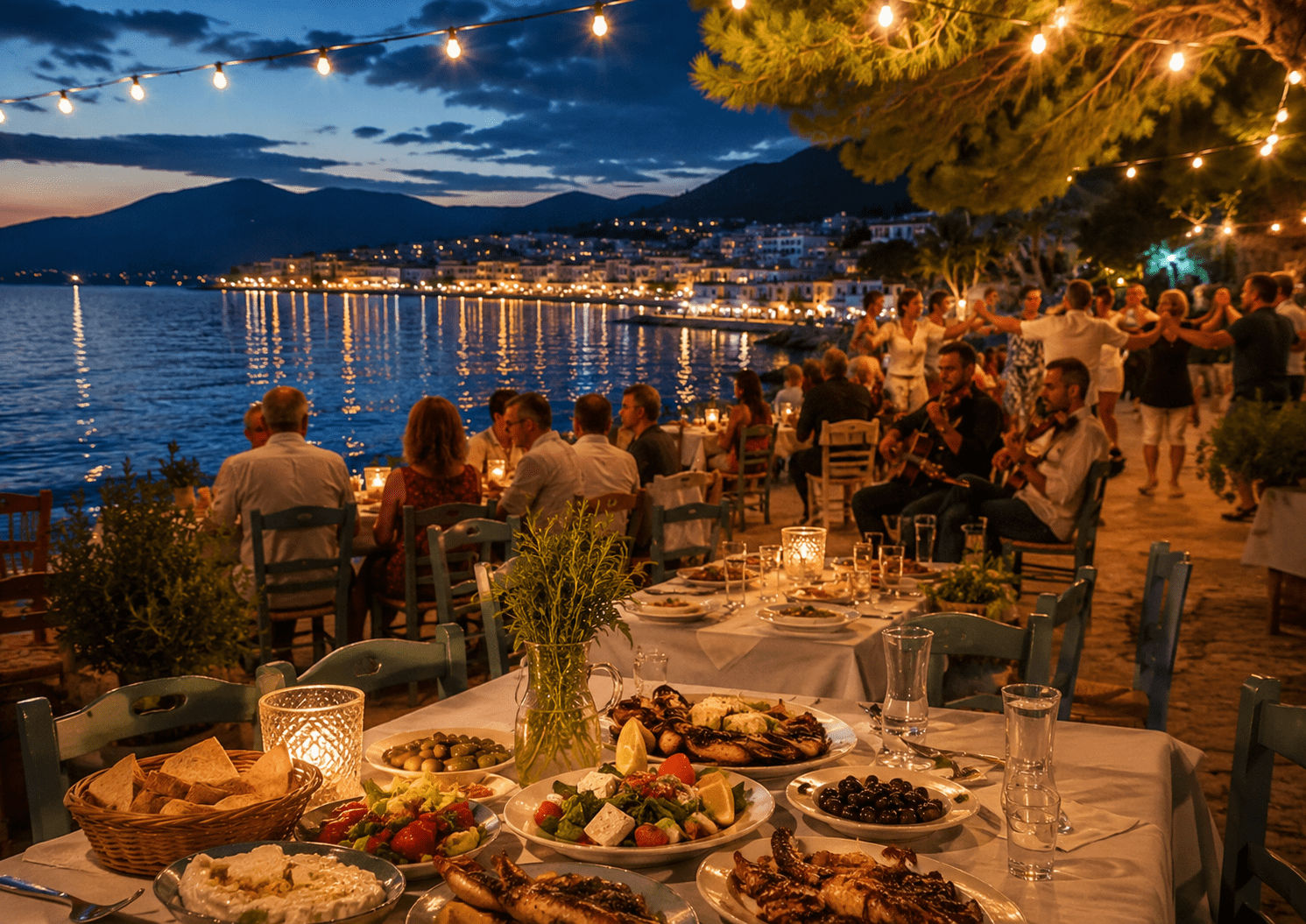
Farewell dinner with live Greek music and seaside hospitality.
The day concludes with a farewell dinner accompanied by live Greek music. Participants can enjoy traditional music while sharing impressions from the journey. Dinner may feature specialties from Arcadian and Peloponnesian cuisine with locally produced wines. The evening serves as the official conclusion of the Peloponnese experience.
Overnight stay in Paralia Astros.
Breakfast at the hotel.
Depart Paralia Astros for Athens, initially following the scenic coastline of northern Kynouria.
Xiropigado is a small seaside village located between Paralia Astros and Nafplio. Set in a picturesque landscape where the hills gently descend toward the sea, the area is known for small coves and beautiful beaches.
Xiropigado is a fine example of a traditional Greek coastal destination, ideal for relaxing holidays, families, and travelers seeking an authentic experience away from major tourist resorts. The stop also offers a final opportunity to photograph the Arcadian coastline.
As the trip progresses, participants leave behind the quiet rural landscapes and coastal scenery of the Peloponnese and return to the vibrant urban environment of Athens.
Depending on flight schedules or onward travel plans, the program may continue with a transfer to the hotel, free time, drop-off at a central location, or transfer to Athens International Airport.
This trip is designed for travel advisors, tour operators, and industry partners who want to experience the Peloponnese firsthand and better understand how to sell Greece beyond the standard Athens and islands itinerary.
The program includes Athens, the Acropolis, Corinth Canal, Paralia Astros, Tyros, Elona Monastery, Kosmas, Leonidio, Diros Cave, Areopoli, Mystras, Sparta, Nafplio, Ancient Epidaurus, Ancient Olympia, Kalamata, and Xiropigado.
Yes. Meals vary by day and are listed in the itinerary. The program includes selected breakfasts, lunches, welcome dinner, and farewell dinner, with a focus on local Greek and Peloponnesian cuisine.
Yes. It works well for first-time visitors because it begins in Athens with the Acropolis and Acropolis Museum, then continues into the Peloponnese for culture, history, gastronomy, nature, wellness, and coastal experiences.
The trip includes archaeological visits, hotel inspections, winery and olive oil experiences, coastal touring, mountain villages, religious heritage sites, agritourism, wellness activities, local gastronomy, and professional networking opportunities.

Guaranteed Departures
Departures: Daily
Guaranteed Departures
Departures: Daily